

Single Coffee Bean: Quality Secrets in Every Roast
The difference between an exceptional cup of coffee and a mediocre one often begins with understanding what happens at the most granular level. When specialty coffee roasters evaluate quality, they don't just assess bags or batches-they examine each single coffee bean to understand the intricate details that contribute to flavor, aroma, and overall quality. This microscopic approach to coffee evaluation has transformed how professionals source, roast, and appreciate premium coffee, revealing that individual beans carry distinct characteristics that collectively define the coffee experience.
The Science Behind Individual Bean Variation
Every single coffee bean within a batch carries unique properties that contribute to the final cup profile. Research has demonstrated that caffeine concentration varies significantly among individual beans, even those harvested from the same plant on the same day. This natural variation extends beyond caffeine to encompass sugars, acids, oils, and hundreds of other compounds that develop during growth and processing.
Understanding this variation requires examining multiple factors:
- Genetic composition determines the bean's potential flavor compounds
- Microclimate conditions affect how each cherry develops on the tree
- Position on the branch influences sun exposure and nutrient access
- Harvest timing captures beans at different ripeness stages
- Processing variations create unique fermentation profiles for individual beans
The implications for quality control are profound. A single coffee bean analysis can reveal defects, moisture inconsistencies, or density problems that would dilute or compromise an entire batch. Premium roasters conduct these examinations to ensure consistency and identify exceptional lots worthy of their single origin offerings.
Density and Moisture Content
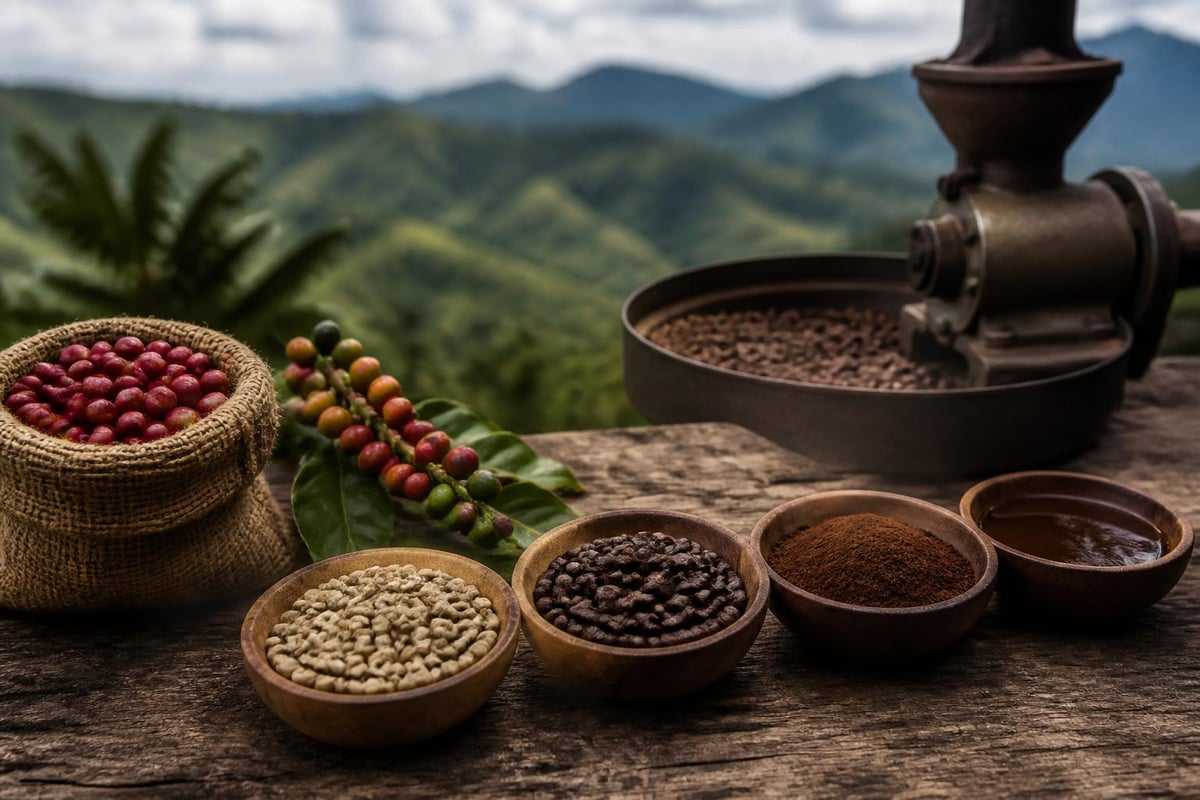
The physical properties of a single coffee bean tell a detailed story about growing conditions and post-harvest handling. Density correlates directly with altitude, with beans grown at higher elevations developing denser cellular structures due to slower maturation. These denser beans contain more complex sugars and acids, producing brighter, more nuanced flavors when roasted properly.
Moisture content represents another critical measurement. The ideal range falls between 10-12%, with variations of even one percentage point affecting roast development and shelf life. A single coffee bean with excessive moisture may roast unevenly, creating grassy or underdeveloped flavors. Conversely, beans that are too dry become brittle and prone to scorching.
| Property | Ideal Range | Impact on Quality |
|---|---|---|
| Density | 0.70-0.85 g/mL | Higher density = more complex flavors |
| Moisture | 10-12% | Affects roast evenness and shelf stability |
| Screen Size | 15-19 (1/64 inch) | Larger beans often indicate quality |
| Defect Rate | <5 per 300g | Lower defects = cleaner cup profile |
Roasting Precision at the Bean Level
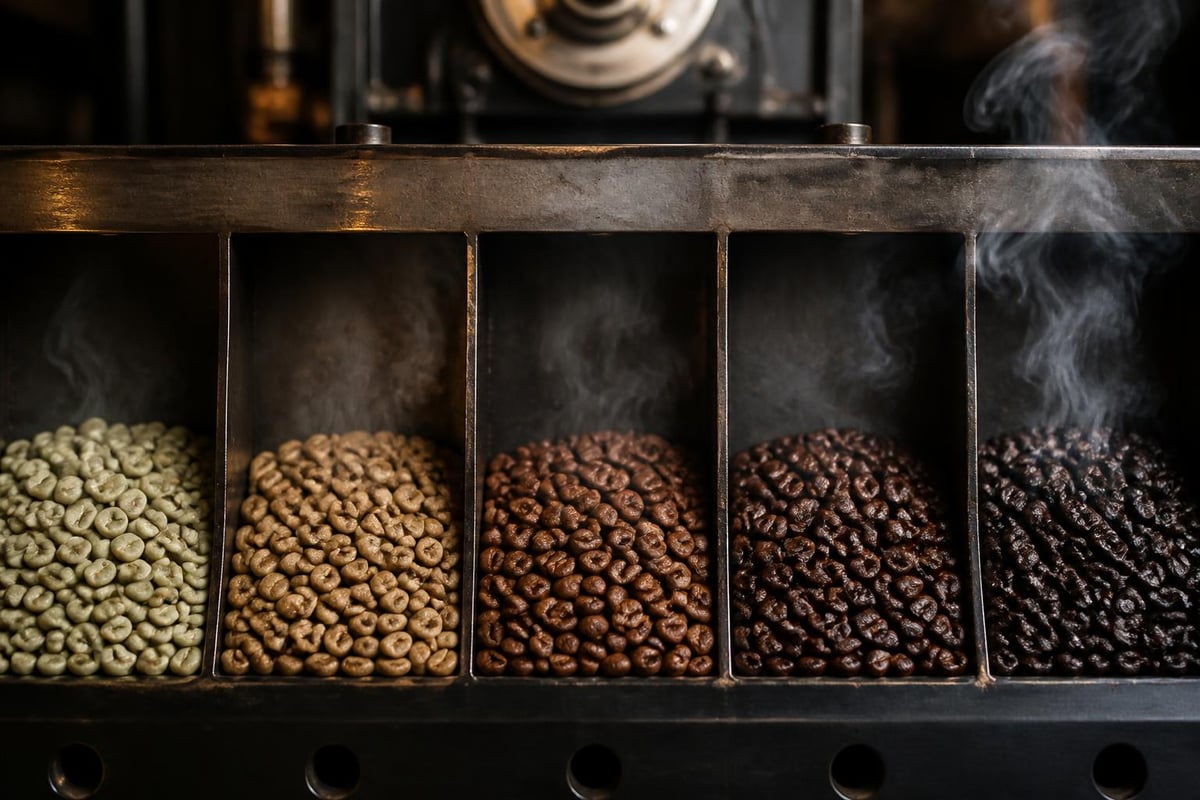
Modern roasting technology has enabled unprecedented precision in monitoring how a single coffee bean transforms during the roasting process. Studies using proton transfer reaction time-of-flight mass spectrometry have tracked volatile compound release from individual beans, revealing that the aromatic profile develops through distinct chemical phases that occur within seconds of each other.
This level of precision matters because beans roast at slightly different rates even within the same batch. Smaller beans reach target temperatures faster than larger ones. Beans positioned at the drum's edge experience different heat transfer than those in the center. Professional roasters account for these variations through:
- Careful bean sizing to ensure uniform roast development
- Drum speed adjustments that promote even heat distribution
- Temperature profiling that accommodates natural variation
- Extended development time allowing slower beans to catch up
- Post-roast sorting to remove any outliers that roasted incorrectly
The goal is achieving consistency across thousands of individual beans, each responding slightly differently to heat application. Understanding single coffee bean behavior during roasting enables roasters to create profiles that bring the entire batch to optimal development simultaneously.
First Crack and Chemical Transformation
The first crack represents a pivotal moment in a single coffee bean's transformation. This audible pop occurs when internal pressure from expanding gases ruptures the bean's cellular structure, typically between 385-400°F. At this exact moment, hundreds of chemical reactions accelerate dramatically.
Chlorogenic acids break down into quinic and caffeic acids, contributing to perceived acidity. Maillard reactions intensify, creating melanoidins that provide body and sweetness. Sugars caramelize, adding complexity and reducing bitterness. For a single coffee bean, the timing of first crack determines whether it develops bright, fruity notes or deeper, caramelized flavors.
Quality Defects and Identification
A single coffee bean can compromise an entire batch if it contains specific defects. The Specialty Coffee Association categorizes defects into two groups based on severity, with some imperfections severe enough that just one bean can disqualify 300 grams from specialty grade classification.
Primary defects include:
- Full black beans resulting from premature picking or poor drying
- Full sour beans caused by fermentation issues
- Dried cherry or pod fragments indicating processing problems
- Foreign matter such as stones, sticks, or metal
- Severe insect damage creating hollow or eaten beans
Secondary defects require multiple occurrences to impact grading but still affect quality:
- Partial black or sour beans
- Floaters indicating low density
- Immature beans lacking full development
- Withered or misshapen beans
- Parchment fragments from incomplete hulling
Identifying these defects requires examining beans individually before roasting. Many specialty roasters perform hand-sorting at multiple stages, removing problematic beans that automated systems might miss. This attention to the single coffee bean level ensures that defects don't introduce off-flavors like earthiness, mustiness, or medicinal notes that would otherwise taint the entire batch.
Cupping and Sensory Evaluation
Professional cupping protocols evaluate coffee quality through systematic tasting, but the process begins with visual inspection of individual beans. Cuppers examine a representative sample, looking for uniformity in size, color, and appearance. Significant variation in a single coffee bean's characteristics within a lot suggests inconsistent processing or blended origins.
The cupping process itself reveals how individual bean variations manifest in the cup. Even when roasted and brewed identically, different beans from the same batch can contribute distinct flavor notes. A single coffee bean with higher sugar content might add sweetness, while another with more developed acids provides brightness. The collective profile represents the sum of these individual contributions.
| Cupping Attribute | What It Reveals | Score Range |
|---|---|---|
| Fragrance/Aroma | Volatile compound development | 6.0-10.0 |
| Flavor | Overall taste impression | 6.0-10.0 |
| Aftertaste | Finish length and quality | 6.0-10.0 |
| Acidity | Brightness and liveliness | 6.0-10.0 |
| Body | Weight and texture | 6.0-10.0 |
| Balance | How components integrate | 6.0-10.0 |
| Sweetness | Natural sugar perception | 6.0-10.0 |
| Clean Cup | Absence of defects | 6.0-10.0 |
Scores below 80 indicate commercial grade coffee, while specialty grade requires 80 points or higher. The difference often comes down to eliminating problematic single coffee beans that introduce defects or inconsistencies.
Processing Methods and Bean Quality
How farmers process coffee cherries after harvest dramatically impacts the characteristics of each single coffee bean. The three primary methods-washed, natural, and honey processed-create distinct flavor profiles by controlling fermentation, drying, and mucilage removal differently.
Washed processing removes all fruit before drying, allowing the bean's intrinsic characteristics to shine without fermentation influence. This method produces clean, bright coffees where terroir and varietal distinctions appear most clearly. Each single coffee bean develops uniformly, as the controlled process minimizes variation.
Natural processing dries the entire cherry with the bean inside, creating intense fruit fermentation that imparts berry and wine-like notes. However, this method introduces more variation at the single coffee bean level, as cherries dry at different rates and fermentation proceeds unevenly. Quality natural process requires meticulous attention to prevent over-fermentation that would create defects.
Honey processing splits the difference, removing skin but leaving varying amounts of mucilage during drying. The amount of mucilage retained (white, yellow, red, or black honey) determines sweetness intensity and body. This processing style demands careful monitoring of individual beans to prevent mold or uneven drying.
For specialty coffee enthusiasts exploring these distinctions, many roasters offer samples that highlight processing differences. Those interested in experiencing how processing affects flavor can take advantage of introductory offers when purchasing directly from roasters-save 10% with code WELCOME10 on your first order to explore various processing styles.
Geographic Origin and Bean Characteristics
The region where a single coffee bean grows imparts distinctive characteristics that professional tasters can identify blind. Coffee regions worldwide produce beans with signature profiles shaped by altitude, soil composition, climate patterns, and indigenous varietals.
African Coffees
Ethiopian and Kenyan beans typically exhibit bright acidity with berry and floral notes. A single coffee bean from Yirgacheffe might carry blueberry aromatics, while Kenyan AA beans often present blackcurrant and tomato-like acidity. These distinctive profiles emerge from ancient heirloom varietals and volcanic soil composition.
Central and South American Coffees
Beans from Colombia, Costa Rica, and Guatemala generally offer balanced profiles with chocolate, nut, and caramel notes. The volcanic soils and ideal altitude ranges (1,200-1,800 meters) create conditions where a single coffee bean develops complex sugars and moderate acidity. Brazilian beans, grown at lower altitudes, tend toward nutty, chocolatey flavors with heavier body.
Asian and Pacific Coffees
Indonesian beans, particularly from Sumatra and Sulawesi, present earthy, herbal characteristics with low acidity and heavy body. The unique wet-hulling process (giling basah) removes parchment while beans retain high moisture, fundamentally altering how each single coffee bean develops. Hawaiian and Papua New Guinean beans offer cleaner profiles with balanced sweetness and medium body.
The Future of Single Bean Analysis
Emerging technologies are revolutionizing how the industry evaluates and sorts coffee at the individual bean level. Near-infrared spectroscopy can now analyze a single coffee bean's chemical composition non-destructively, identifying defects, moisture content, and even predicting cup quality before roasting. Machine learning algorithms process thousands of beans per minute, removing defects with precision impossible through manual sorting.
These innovations enable roasters to achieve unprecedented consistency while reducing waste. Rather than discarding entire batches due to quality concerns, advanced sorting isolates problematic beans while preserving premium specimens. The result is higher average quality across the specialty coffee industry and better value for consumers.
Some forward-thinking roasters are even exploring bean-level traceability, using blockchain technology to track individual lots from specific farms through processing, shipping, and roasting. This transparency allows consumers to understand exactly what they're drinking and ensures farmers receive appropriate compensation for quality production.
Storage and Freshness Considerations
How a single coffee bean ages after roasting significantly impacts flavor quality. The enemy of freshly roasted coffee is oxygen, which oxidizes the aromatic oils and compounds that provide complexity and brightness. Within days of roasting, these volatile compounds begin dissipating, though proper storage slows the process.
Whole beans maintain quality far longer than ground coffee because grinding dramatically increases surface area exposed to oxygen. A single coffee bean in whole form protects its internal oils and aromatics through its cellular structure. Once ground, those same compounds begin degrading within minutes.
Optimal storage practices include:
- Airtight containers that exclude oxygen exposure
- Cool, dark locations away from heat and light
- Avoiding refrigeration, which introduces moisture
- Using beans within 2-4 weeks of roast date
- Grinding only immediately before brewing
- Protecting from strong odors that beans absorb readily
The quality inherent in each single coffee bean can only be preserved through proper handling after roasting. Even the finest beans lose their distinctive characteristics when stored improperly or used past their prime.
Brewing Extraction and Individual Beans
When hot water contacts ground coffee, it extracts soluble compounds from each single coffee bean at different rates. The first compounds to extract are acids and volatile aromatics, followed by sugars and caramels, with bitter compounds extracting last. Proper brewing aims to extract the desirable compounds while minimizing harsh bitterness.
Extraction efficiency depends on:
- Grind size controlling water flow and contact time
- Water temperature affecting extraction speed (195-205°F optimal)
- Contact time determining which compounds dissolve
- Agitation increasing interaction between water and grounds
- Water chemistry influencing solubility of various compounds
Each brewing method extracts differently from a single coffee bean. Espresso's high pressure and short contact time produces concentrated sweetness and body. Pour-over methods allow more nuanced extraction, highlighting delicate aromatics and acidity. French press permits longer contact, extracting more oils and creating heavier body.
Understanding these dynamics helps coffee lovers adjust their brewing to match bean characteristics. Light roasted beans with bright acidity benefit from slightly lower temperatures and moderate extraction times, while darker roasts require careful attention to prevent over-extraction and excessive bitterness.
The journey from a single coffee bean to an exceptional cup involves countless decisions and meticulous attention to detail at every stage. By understanding the science, processing methods, and quality factors that influence individual beans, coffee enthusiasts can better appreciate the complexity in every sip and make more informed purchasing decisions. Whether you're exploring different origins, processing styles, or roast levels, Velours de Paris Coffee offers carefully curated selections that showcase the distinctive characteristics of premium beans from the world's finest regions, all roasted in small batches to preserve the unique qualities that make specialty coffee extraordinary.