

Coffee Regions: World's Premier Growing Areas in 2026
The world's most exceptional coffee beans originate from specific geographic zones where climate, altitude, and soil composition converge to create ideal growing conditions. Understanding coffee regions helps specialty coffee enthusiasts appreciate the distinctive flavors in their cup while guiding roasters and retailers in sourcing premium beans. From the volcanic slopes of Central America to the high-altitude plateaus of East Africa, each region contributes unique characteristics that define the global specialty coffee landscape.
The Bean Belt: Understanding Global Coffee Geography
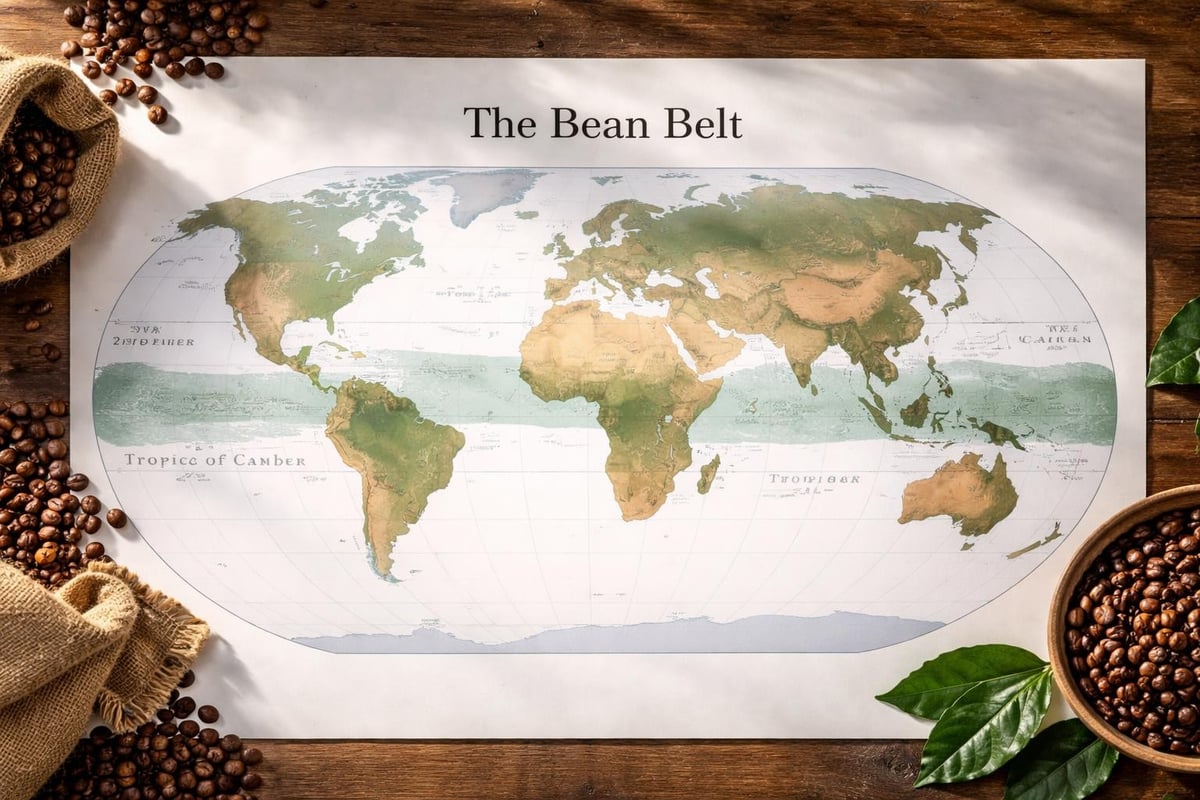
Coffee cultivation thrives within a narrow equatorial band known as the Bean Belt, stretching between the Tropics of Cancer and Capricorn. This geographic constraint exists because coffee plants require specific environmental conditions that only exist within approximately 25 degrees north and south of the equator.
The two primary coffee species, Arabica and Robusta, dominate commercial production across these regions. Arabica coffee represents approximately 60-70% of global production and commands premium prices due to its superior flavor complexity. Robusta coffee grows at lower altitudes and offers higher caffeine content with more pronounced bitter notes.
Climate Requirements for Coffee Cultivation
Temperature stability remains paramount for successful coffee cultivation. Most coffee regions maintain average temperatures between 60-70°F (15-24°C) throughout the year, with Arabica varieties preferring cooler temperatures than Robusta.
Essential climate factors include:
- Consistent rainfall patterns (60-100 inches annually)
- Distinct wet and dry seasons for flowering and harvesting
- Protection from frost and extreme temperature fluctuations
- Adequate cloud cover or shade to prevent leaf scorching
- Well-distributed precipitation throughout growing seasons
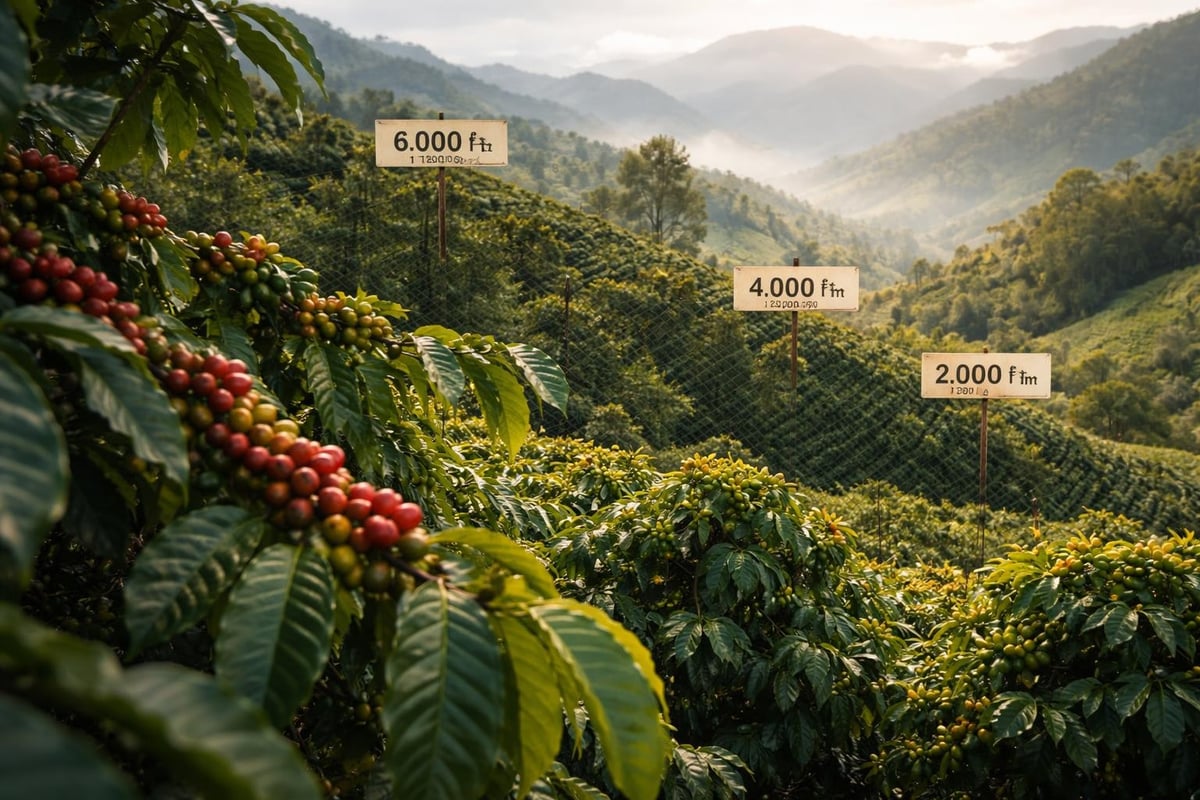
Altitude significantly impacts flavor development, with higher elevations producing denser beans and more complex acidity. Premium Arabica coffees typically grow between 3,000-6,000 feet, while Robusta thrives at lower elevations from sea level to 3,000 feet.
Central American Coffee Regions
Central America produces some of the world's most sought-after specialty coffees, characterized by bright acidity, balanced sweetness, and clean flavor profiles. The region's volcanic soil provides exceptional mineral content that translates directly into cup quality.
Costa Rica
Costa Rican coffee gained international recognition for its honey and natural processing methods. The Tarrazú region produces exceptionally bright coffees with citrus notes, while the Central Valley offers balanced profiles with chocolate undertones. Costa Rican law prohibits Robusta cultivation, ensuring exclusive focus on premium Arabica production.
Key growing regions:
- Tarrazú (high acidity, full body)
- West Valley (balanced, sweet)
- Central Valley (classic profile)
- Tres Ríos (wine-like complexity)
Guatemala
Guatemala's diverse microclimates create distinct regional characteristics across eight primary coffee-growing areas. Antigua produces coffees with pronounced spice notes and full body, while Huehuetenango yields bright, fruity profiles with wine-like acidity.
The volcanic soil composition in regions like Atitlán contributes mineral complexity that sophisticated palates recognize immediately. Many Guatemalan coffees exhibit chocolate undertones paired with bright citrus acidity, creating exceptional balance.
South American Coffee Powerhouses
South America dominates global coffee production, with Brazil alone accounting for approximately one-third of worldwide output. The continent's varied geography supports both massive commercial operations and boutique specialty farms.
Brazil
As the world's largest coffee producer, Brazil supplies both commodity-grade and specialty beans. The country's relatively flat terrain and lower altitudes traditionally produced mild, nutty coffees with chocolate notes. However, recent focus on high-altitude regions like Cerrado and Mogiana has elevated Brazil's specialty coffee reputation.
| Region | Altitude Range | Flavor Profile | Processing Method |
|---|---|---|---|
| Cerrado | 2,000-4,000 ft | Nutty, chocolate, low acidity | Natural, pulped natural |
| Mogiana | 3,000-5,000 ft | Sweet, caramel, medium body | Natural, washed |
| Sul de Minas | 2,500-4,500 ft | Balanced, fruity, clean | Washed, natural |
Colombia
Colombian coffee regions benefit from two annual harvests due to bimodal rainfall patterns. The country's mountainous terrain creates numerous microclimates where smallholder farmers cultivate Arabica varieties at ideal altitudes.
Regions like Huila and Nariño produce exceptionally bright coffees with tropical fruit notes and caramel sweetness. The Colombian Coffee Federation's quality control measures ensure consistent standards across the country's diverse growing areas. Exploring coffee from America reveals the remarkable diversity within South American production.
East African Coffee Regions
Africa produces some of the world's most distinctive and complex coffees, with flavor profiles ranging from delicate florals to bold berry notes. The continent's high-altitude growing regions and heirloom varieties create unparalleled cup characteristics.
Ethiopia
As coffee's birthplace, Ethiopia maintains incredible genetic diversity with thousands of heirloom varieties. The country's primary regions include Yirgacheffe, Sidamo, and Harrar, each offering distinct sensory experiences.
Yirgacheffe coffees showcase delicate floral aromatics with bergamot and jasmine notes, often accompanied by bright lemon acidity. Sidamo beans present berry-forward profiles with wine-like complexity, while Harrar coffees deliver bold blueberry notes with dry, winey characteristics.
Natural processing remains traditional in Ethiopia, contributing to the intense fruit flavors that characterize many Ethiopian coffees. According to coffee history research, Ethiopia's unique terroir creates flavor compounds found nowhere else in the coffee-growing world.
Kenya
Kenyan coffee commands premium prices due to its exceptional brightness and complex acidity. The country's double-fermentation washing process enhances clarity and intensifies the characteristic blackcurrant notes that define Kenyan profiles.
Most Kenyan coffee grows on small farms surrounding Mount Kenya, where rich volcanic soil and high altitudes (5,000-7,000 feet) produce dense beans with remarkable sweetness. The SL28 and SL34 varieties, developed specifically for Kenyan conditions, contribute to the region's distinctive taste profile.
Southeast Asian Coffee Regions
Asia produces approximately 25% of global coffee, with Indonesia and Vietnam leading regional output. The area's unique processing methods and climate conditions create earthy, full-bodied profiles distinct from African and Latin American coffees.
Indonesia
Indonesian coffee regions span multiple islands, each contributing unique characteristics. Sumatra produces heavy-bodied coffees with earthy, herbal notes resulting from the wet-hulling (giling basah) process. This unique method creates the low-acidity, syrupy profile that defines Sumatran coffee.
Major Indonesian regions:
- Sumatra (earthy, full-bodied, low acidity)
- Java (balanced, spicy, clean)
- Sulawesi (sweet, smooth, complex)
- Bali (bright, fruity, medium body)
The Mandheling and Lintong regions of Sumatra produce particularly sought-after specialty lots. These coffees pair exceptionally well in blends, providing body and earthiness that balance brighter Latin American components.
Vietnam
Vietnam ranks as the world's second-largest coffee producer, focusing primarily on Robusta cultivation. The Central Highlands around Buon Ma Thuot create ideal conditions for high-quality Robusta, which finds primary use in instant coffee and espresso blends.
Recent specialty coffee development has introduced more Arabica cultivation in higher-altitude areas. These Vietnamese Arabica lots offer chocolate notes with moderate acidity, though they remain relatively unknown compared to the country's Robusta dominance.
Emerging Coffee Regions
The specialty coffee industry continuously explores new growing regions as climate change affects traditional areas and consumer demand for novelty increases. Several emerging regions show exceptional promise for premium coffee production.
China's Yunnan Province
Yunnan Province in southern China has rapidly developed its specialty coffee sector since 2000. The region's altitude, climate, and soil composition mirror premium Central American conditions, producing clean, balanced coffees with chocolate and nut characteristics.
Chinese coffee production focuses on quality over quantity, with many farms implementing sustainable practices and pursuing specialty certifications. Yunnan coffees have begun appearing at international competitions, gaining recognition for their refined profiles.
Hawaii
While technically not emerging, Hawaiian coffee production remains relatively small but commands premium prices. Kona coffee from the Big Island's western slopes produces exceptionally smooth, balanced cups with mild acidity and rich body. The limited growing area and high labor costs make Hawaiian coffee among the world's most expensive.
Terroir and Regional Flavor Characteristics
The concept of terroir, borrowed from wine culture, applies powerfully to coffee regions. Each area's unique combination of soil composition, altitude, rainfall patterns, and processing traditions creates distinct flavor signatures.
Understanding regional characteristics helps specialty coffee buyers select beans that match their preferences. Single origin beans showcase these terroir-driven flavors most clearly, allowing consumers to experience the pure expression of a specific region.
Soil Composition Impact
Volcanic soil dominates many premium coffee regions, providing exceptional drainage and rich mineral content. These minerals directly influence flavor development, contributing to complexity and clarity in the cup.
| Soil Type | Regions | Flavor Contribution |
|---|---|---|
| Volcanic | Guatemala, Indonesia, Hawaii | Mineral complexity, clarity |
| Clay-loam | Brazil, Vietnam | Body, sweetness |
| Sandy-loam | Ethiopia, Yemen | Brightness, floral notes |
| Red laterite | Kenya, Tanzania | Acidity, fruit notes |
The mineral composition varies significantly between regions, with elements like iron, magnesium, and potassium affecting bean chemistry during development. This geological diversity explains why coffees from similar altitudes can taste dramatically different.
Processing Methods by Region
Regional processing traditions significantly impact final cup profiles. Understanding these methods helps explain why coffee regions produce characteristic flavors beyond their terroir advantages.
Natural/dry processing dominates in water-scarce regions like Ethiopia and Yemen, contributing intense fruit flavors and full body. Washed processing prevails in Central America and East Africa, emphasizing clarity and bright acidity. Honey processing has gained popularity in Costa Rica and other Central American countries, offering sweetness between natural and washed profiles.
Indonesia's wet-hulling method creates the earthy, low-acid profile unique to Sumatran coffees. This processing innovation emerged from the region's high humidity, demonstrating how environmental constraints drive processing adaptations.
Sourcing Strategies for Premium Beans
Specialty coffee roasters must develop sophisticated sourcing strategies to access the best lots from premier coffee regions. Direct trade relationships, quality grading systems, and seasonal timing all influence bean selection.
Many roasters visit origin countries during harvest season to cup samples and build relationships with producers. These direct connections ensure access to exceptional microlots that never reach commodity markets. For specialty operations, understanding the complete list of coffee regions helps identify sourcing opportunities beyond well-known areas.
Quality scoring systems like the Specialty Coffee Association's 100-point scale help buyers evaluate beans objectively. Coffees scoring 80+ points qualify as specialty grade, with regional characteristics heavily influencing score potential.
For coffee enthusiasts looking to experience exceptional beans from world-class regions, many specialty roasters offer carefully curated selections that highlight regional diversity. Those seeking premium options can explore a range of exceptional single origin coffee showcasing these distinct regional characteristics.
Climate Change Impact on Coffee Regions
Rising temperatures and shifting rainfall patterns threaten traditional coffee regions worldwide. Scientific projections suggest that by 2050, approximately 50% of current Arabica-growing areas may become unsuitable for cultivation without adaptation strategies.
Higher temperatures force coffee cultivation to higher altitudes, reducing available growing area and intensifying competition for suitable land. Some regions experience more severe impacts than others, with low-altitude areas facing the greatest challenges.
Adaptation strategies include:
- Developing heat-resistant coffee varieties
- Implementing shade-growing systems
- Relocating farms to higher elevations
- Improving water management practices
- Diversifying farm income sources
Organizations like World Coffee Research work to develop climate-resilient varieties that maintain quality while tolerating warmer temperatures. These efforts prove critical for preserving coffee regions as viable production areas for future generations.
Regional Certification and Quality Programs
Many coffee regions have developed certification programs and geographic indicators to protect their reputation and ensure quality standards. These systems benefit both producers and consumers by establishing clear quality benchmarks.
Colombia's Protected Designation of Origin status guarantees that beans labeled "Colombian coffee" meet specific quality criteria and originate from designated regions. Similar programs exist for Jamaican Blue Mountain, Kona, and other premium regions.
Cup of Excellence Programs
The Cup of Excellence competition operates in multiple countries, identifying the highest-quality lots through rigorous cupping protocols. Winning coffees command premium prices at international auctions, incentivizing quality improvement throughout participating regions.
These competitions shine spotlight on exceptional producers and lesser-known microclimates within established coffee regions. The transparency provided by detailed cupping notes helps buyers understand what makes each winning lot special.
Blending Beans from Multiple Regions
While single-origin coffees showcase individual regional characteristics, strategic blending combines complementary profiles from different coffee regions to create balanced, complex cups. Master blenders select beans that enhance each other's strengths while minimizing weaknesses.
A classic espresso blend might combine bright Central American beans for acidity, Brazilian coffee for body and sweetness, and Indonesian beans for depth and low-end richness. The specific ratios and regional selections define each blend's unique character.
Seasonal blending adjusts component origins as harvest cycles change throughout the year. This practice maintains consistent flavor profiles despite the temporal nature of coffee production. Understanding global coffee growing regions helps blenders time their purchases to access peak-season beans from each area.
Future of Coffee Regions
The specialty coffee industry continues evolving as new regions emerge, processing innovations spread, and consumer preferences shift. Technology enables better quality control and traceability, allowing even small producers to reach international markets.
Transparency initiatives provide consumers with detailed information about coffee origins, processing methods, and farmer compensation. Blockchain technology and QR codes help verify provenance claims, ensuring that regional designations accurately reflect bean sources.
Investment in infrastructure and training programs helps developing coffee regions improve quality and market access. Organizations provide resources for processing equipment, quality labs, and agronomic education that elevate entire regional production standards.
The relationship between coffee regions and flavor profiles will remain fundamental to specialty coffee appreciation. As climate change and market dynamics reshape the industry, understanding these geographic influences becomes increasingly valuable for everyone from farmers to consumers.
Understanding coffee regions transforms how we appreciate each cup by revealing the geographic, climatic, and cultural forces that shape flavor profiles. Whether you prefer the bright acidity of East African beans or the balanced sweetness of Central American varieties, regional characteristics provide a framework for exploring the world's diverse coffee offerings. Discover exceptional beans from the world's premier growing areas through Velours de Paris Coffee, where small-batch roasting preserves the unique terroir-driven flavors that make each region special.