

Oz Specialty Coffee: Precision Measurements & Quality
The measurement of coffee in ounces represents more than just a unit of weight-it embodies the precision and attention to detail that defines the specialty coffee industry. When discussing oz specialty coffee, professionals and enthusiasts alike recognize that accurate measurements directly influence extraction, flavor profile, and overall coffee quality. This precision-driven approach has become a hallmark of premium coffee preparation, where every ounce matters in creating the perfect cup. Understanding the relationship between measurement accuracy and coffee excellence provides valuable insights into why the specialty coffee market continues to grow, with projections reaching $81.8 billion by 2030 in the United States alone.
The Science Behind Coffee Measurement Standards
Coffee measurement in ounces serves as the foundation for consistency and quality control throughout the specialty coffee supply chain. Professional roasters, baristas, and home enthusiasts rely on precise weight measurements to maintain the exacting standards that distinguish specialty coffee from commercial alternatives.
Weight Versus Volume in Coffee Preparation
The distinction between weight and volume measurements fundamentally impacts brewing outcomes. While casual coffee drinkers might measure coffee by volume using scoops or cups, oz specialty coffee practitioners understand that weight-based measurements provide superior accuracy and repeatability.
Key advantages of weight-based measurements include:
- Elimination of variables caused by grind size differences
- Consistent coffee-to-water ratios across different brewing methods
- Enhanced quality control during roasting and packaging
- Reproducible results that maintain flavor profiles
Different coffee beans exhibit varying densities based on origin, processing method, and roast level. A tablespoon of light-roasted Ethiopian coffee weighs differently than the same volume of dark-roasted Brazilian beans. This variance makes volume measurements unreliable, while ounce-based measurements ensure precision regardless of bean characteristics.
Standard Ratios in Specialty Coffee
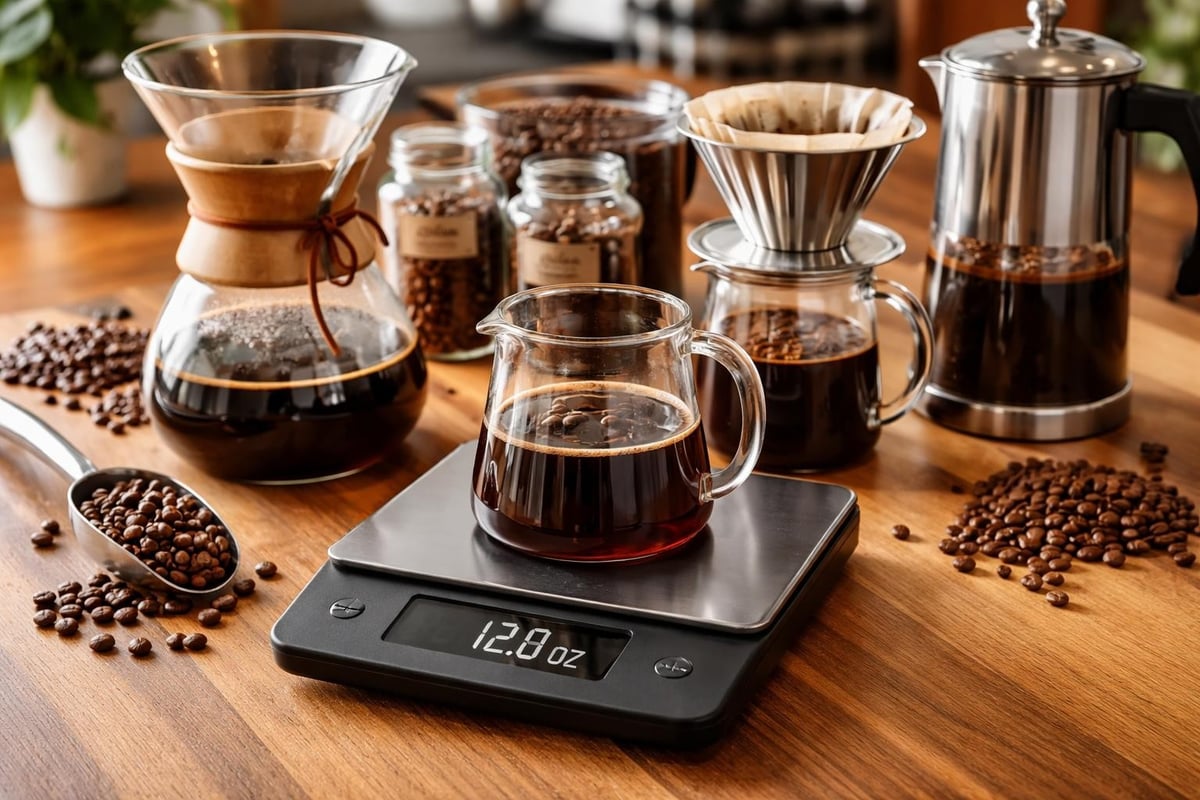
The Specialty Coffee Association establishes specific guidelines for coffee-to-water ratios, typically expressed in ounces or grams. The industry standard golden ratio suggests approximately 0.36 ounces (10 grams) of coffee per 6 ounces of water, though this varies based on brewing method and personal preference.
| Brewing Method | Coffee (oz) | Water (oz) | Ratio |
|---|---|---|---|
| Pour Over | 0.7 | 12 | 1:17 |
| French Press | 0.9 | 12 | 1:13 |
| Espresso | 0.63 | 2 | 1:3 |
| Cold Brew | 1.4 | 12 | 1:8 |
These measurements represent starting points that professionals adjust based on bean characteristics, roast profile, and desired flavor intensity. The precision inherent in oz specialty coffee measurements allows for systematic experimentation and refinement.
Market Dynamics Shaping Specialty Coffee Consumption
The specialty coffee industry experiences continuous evolution driven by consumer preferences, technological advancement, and competitive innovation. Understanding these market forces provides context for how measurement precision relates to broader industry trends.
Growth Patterns and Consumer Behavior
Specialty coffee market analysis reveals sustained growth across global markets, with particular strength in North America and Europe. Consumer education has elevated expectations regarding coffee quality, traceability, and preparation methods.
Notable market trends include:
- Increased home brewing sophistication
- Rising demand for single-origin offerings
- Premium pricing acceptance for quality products
- Growing interest in brewing precision tools
- Expansion of ready-to-drink specialty options
The shift toward home coffee consumption has reached a 14-year high as consumers invest in quality beans and brewing equipment. This trend emphasizes the importance of precise measurements, as home brewers seek to replicate café-quality results.
Competitive Landscape and Differentiation
The specialty coffee sector faces intensifying competition with new entrants challenging established players through innovation and quality differentiation. For roasters like those at Velours de Paris Coffee, maintaining consistent quality through precise measurement and small-batch roasting creates competitive advantages.
Market cannibalization presents challenges as constant innovation within the specialty coffee industry creates overlapping product categories. Differentiation through quality consistency, unique flavor profiles, and transparent sourcing becomes essential for maintaining market position.
Practical Applications of Precision Measurement
Translating measurement precision into exceptional coffee experiences requires understanding how ounce-based standards apply across different preparation scenarios. Both commercial operations and home enthusiasts benefit from mastering these fundamentals.
Commercial Roasting and Packaging Standards
Professional roasters rely on oz specialty coffee measurements throughout production processes. Batch sizes, roast profiles, and packaging specifications all depend on accurate weight measurements to ensure consistency across thousands of pounds of coffee.
Small-batch roasting operations typically process between 8 and 24 ounces of green coffee per batch, allowing for precise control over roast development. This approach enables roasters to highlight specific flavor characteristics inherent to each origin while maintaining batch-to-batch consistency.
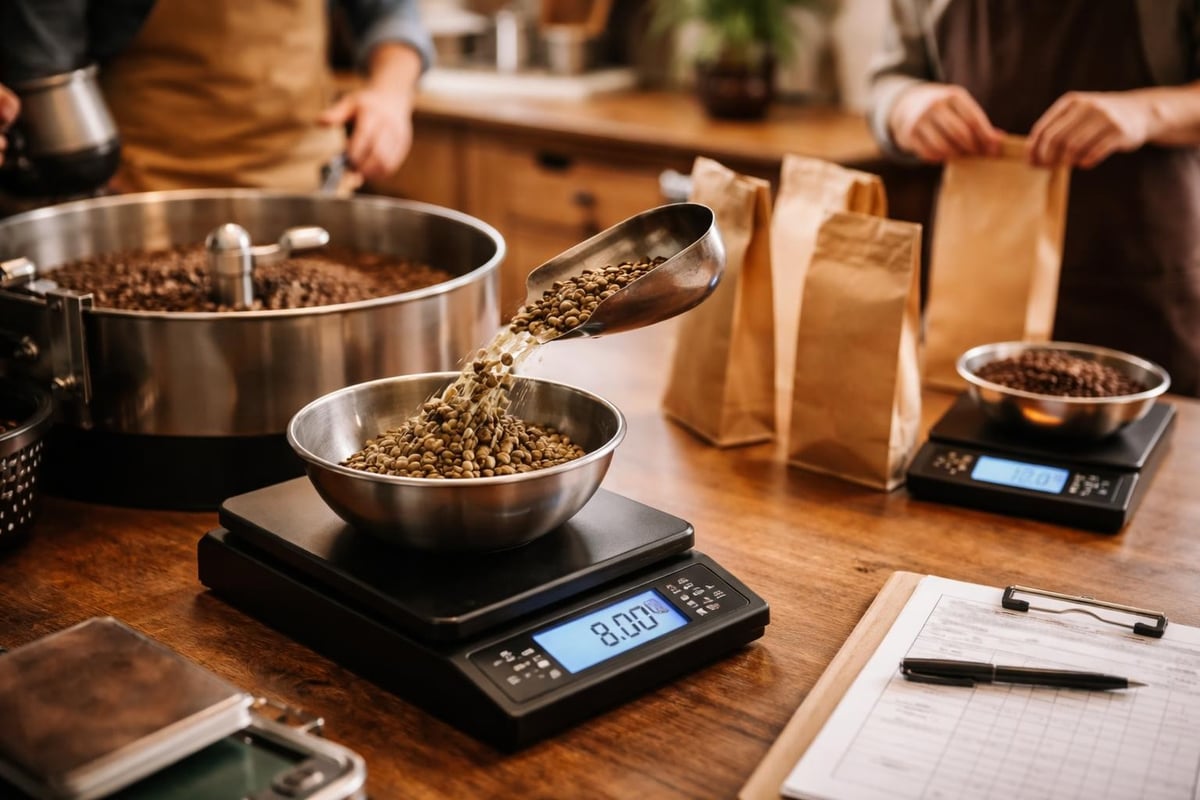
Quality control protocols in specialty roasting facilities include:
- Pre-roast weight verification of green coffee
- Moisture content assessment affecting final yield
- Post-roast weight documentation for loss calculations
- Packaging accuracy ensuring labeled weights match contents
- Sample roasting in 3-5 oz batches for quality testing
Home Brewing Best Practices
Home coffee enthusiasts benefit significantly from adopting professional measurement standards. Digital scales accurate to 0.1 ounces transform brewing from guesswork into a repeatable craft that consistently produces excellent results.
Essential home brewing measurements:
- Starting coffee dose: 0.6-0.7 oz per 10 oz water
- Espresso preparation: 0.6-0.7 oz coffee yielding 2 oz beverage
- Cold brew concentrate: 1.4 oz coffee per 12 oz water
- French press: 0.9 oz coffee per 12 oz water
For those exploring specialty coffee varieties, precise measurements become even more critical. Premium beans deserve preparation methods that showcase their unique characteristics, and measurement accuracy ensures these qualities shine through in the cup.
Single Origin and Blend Considerations
Different coffee categories respond uniquely to measurement precision, with single origins and blends each presenting distinct challenges and opportunities for optimization.
Single Origin Measurement Protocols
Single origin coffees exhibit terroir-driven characteristics that require careful measurement to express fully. These coffees often feature delicate flavor notes that become muted or overpowered when extraction parameters deviate from optimal ranges.
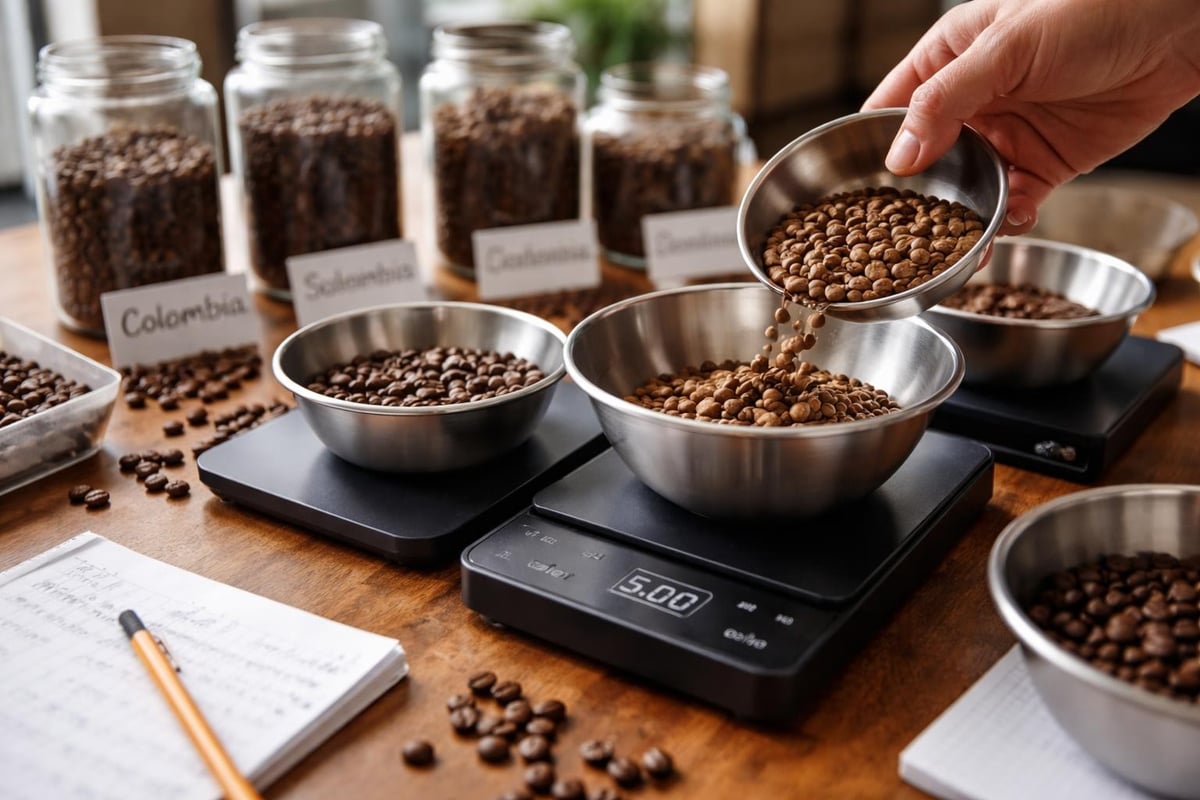
Ethiopian naturals, for example, display vibrant fruit notes when brewed at ratios between 1:16 and 1:17, but these same beans may taste muddled at stronger concentrations. Colombian washed coffees offer more forgiving extraction windows while still benefiting from precise oz specialty coffee measurements.
Testing protocols for single origins typically involve:
- Establishing baseline measurements at 1:16 ratio
- Adjusting coffee dose by 0.1 oz increments
- Documenting flavor changes across measurement range
- Identifying optimal extraction parameters
- Recording final specifications for repeatability
Blending and Measurement Precision
Coffee blends require additional measurement considerations as roasters combine beans with different densities, moisture contents, and characteristics. Creating consistent blends demands precise measurement of component coffees before and after roasting.
| Blend Component | Green Weight (oz) | Roasted Weight (oz) | Percentage |
|---|---|---|---|
| Brazilian Base | 10.0 | 8.5 | 50% |
| Colombian Accent | 6.0 | 5.1 | 30% |
| Ethiopian Highlight | 4.0 | 3.4 | 20% |
Weight loss during roasting varies by origin and roast level, typically ranging from 12% to 18%. Blending before roasting requires adjusting green coffee weights to achieve desired post-roast percentages, while blending after roasting allows for direct measurement of final ratios.
Flavor Development Through Measurement Control
The relationship between measurement precision and flavor development represents a cornerstone principle in specialty coffee preparation. Understanding how small measurement variations impact taste empowers coffee professionals and enthusiasts to optimize their brewing results.
Extraction and Measurement Relationships
Coffee extraction occurs when water dissolves soluble compounds from ground coffee. The percentage of coffee mass extracted determines flavor balance, with under-extraction producing sour, weak coffee and over-extraction yielding bitter, astringent results.
Optimal extraction typically falls between 18% and 22% of total coffee mass. Achieving this range consistently requires precise control over multiple variables, with coffee dose measurement serving as the foundational parameter that influences all others.
Measurement impacts on extraction include:
- Coffee dose affecting total available solubles
- Grind size interacting with dose for surface area control
- Water temperature interaction with coffee quantity
- Brew time relationships to coffee mass
- Turbulence and agitation effects on extraction efficiency
When working with flavored coffee varieties, measurement precision becomes even more critical. Natural and artificial flavorings require balanced extraction to integrate smoothly with base coffee characteristics rather than dominating or disappearing in the final cup.
Advanced Measurement Techniques
Professional baristas and coffee scientists employ sophisticated measurement approaches that extend beyond simple weight-based protocols. Total Dissolved Solids (TDS) measurements, combined with brew strength calculations, provide comprehensive extraction analysis.
A refractometer measures TDS percentage in brewed coffee, typically ranging from 1.15% to 1.45% for optimal results. When combined with precise input measurements of coffee dose and output measurements of brewed volume, these readings enable calculation of extraction percentage.
The brewing control chart, developed by the Specialty Coffee Association, plots TDS against extraction percentage to identify ideal brewing zones. Maintaining consistent oz specialty coffee measurements provides the foundation for meaningful data interpretation and brewing optimization.
Packaging and Portion Control
Retail packaging standards in the specialty coffee industry reflect both consumer preferences and measurement practicality. Understanding common package sizes helps consumers optimize their purchasing and storage decisions.
Standard Package Sizes
| Package Size | Ounces | Typical Use Case |
|---|---|---|
| Sample | 2-4 oz | Trial/testing |
| Retail Bag | 12 oz | Home brewing |
| Bulk Bag | 2 lb (32 oz) | High consumption |
| Wholesale | 5 lb (80 oz) | Commercial use |
The 12-ounce bag has emerged as the specialty coffee industry standard, providing approximately 24 servings when using a 0.5-ounce dose. This size balances freshness considerations with consumer convenience, as coffee begins losing peak flavor approximately two to three weeks after roasting.
For those interested in trying multiple varieties, sample packs offer an economical way to explore different origins and flavor profiles while maintaining freshness across smaller portions.
Storage and Freshness Considerations
Proper storage significantly impacts how long coffee maintains its peak characteristics after roasting. Measurement precision extends beyond brewing into storage management, as exposure to oxygen, light, and moisture degrades coffee quality over time.
Storage best practices include:
- Transferring coffee to airtight containers after opening
- Storing in cool, dark locations away from heat sources
- Measuring out only needed portions to minimize exposure
- Avoiding refrigeration or freezing for short-term storage
- Using oxygen-absorbing packets for extended storage periods
For coffee consumed within three weeks of roasting, standard airtight containers at room temperature provide optimal storage conditions. Freezing becomes beneficial only for coffee stored longer than one month, and requires careful moisture protection and complete thawing before use.
The Role of Equipment in Measurement Accuracy
Achieving consistent oz specialty coffee measurements requires appropriate tools that deliver reliable, repeatable results. Investment in quality measurement equipment pays dividends through improved brewing outcomes and reduced waste.
Essential Measurement Tools
Digital scales represent the most critical investment for anyone serious about coffee quality. Modern coffee scales offer features specifically designed for brewing applications, including built-in timers, auto-tare functions, and waterproof designs.
Key scale specifications:
- Accuracy: ±0.1 oz or ±0.5 g minimum
- Capacity: 4-8 lb maximum for versatility
- Response time: Less than 1 second for pour-over applications
- Display: Backlit for visibility in various conditions
- Battery life: Rechargeable or long-life replaceable options
While professional-grade scales cost between $50 and $150, entry-level models starting around $20 provide adequate accuracy for most home brewing applications. The investment quickly justifies itself through improved consistency and reduced bean waste from poorly measured doses.
Calibration and Maintenance
Regular calibration ensures measurement tools maintain accuracy over time. Most quality digital scales include calibration functions requiring standard weights for verification and adjustment.
Calibration should occur quarterly for home use and monthly for commercial applications. Testing involves placing a known weight on the scale and verifying the displayed measurement matches the standard within acceptable tolerance ranges.
Educational Resources and Skill Development
Mastering oz specialty coffee measurement techniques requires education and practice. Numerous resources support skill development for both beginners and experienced coffee professionals seeking to refine their expertise.
Professional Training Programs
Specialty Coffee Association certification programs include comprehensive coverage of measurement standards and brewing science. These courses range from introductory barista skills through advanced roasting and sensory analysis.
Coffee professionals benefit from structured learning that connects measurement precision with flavor outcomes. Understanding the "why" behind measurement protocols improves adherence and enables intelligent adaptation when standard procedures require modification.
Home Learning Approaches
Home coffee enthusiasts can develop measurement skills through systematic experimentation. Keeping a brewing journal that documents coffee dose, water volume, grind settings, and tasting notes enables pattern recognition and continuous improvement.
Effective learning strategies include:
- Single-variable testing to isolate measurement effects
- Blind tasting to eliminate bias
- Side-by-side comparisons of different doses
- Tracking preferred ratios for different coffee origins
- Regular recalibration of equipment and palate
Exploring offerings like cold brew coffee provides opportunities to experiment with measurement precision in contexts where brewing time extends over 12-24 hours, emphasizing how initial measurements influence long-term extraction.
Sustainability and Measurement Efficiency
Precise measurement contributes to sustainability goals by minimizing waste and optimizing resource utilization throughout the coffee supply chain. The environmental impact of coffee production makes efficiency improvements particularly valuable.
Reducing Waste Through Accuracy
Over-dosing coffee represents both economic waste and environmental inefficiency. When commercial operations brew hundreds of cups daily, even small measurement inconsistencies compound into significant waste volumes.
A café brewing 300 cups daily with just 0.1 oz excess coffee per cup wastes 30 ounces daily, accumulating to nearly 70 pounds annually. Precise oz specialty coffee measurements eliminate this waste while maintaining quality standards.
Supply Chain Optimization
Measurement accuracy throughout the supply chain-from cherry harvesting through final packaging-reduces losses and improves economic sustainability for coffee producers. Computer vision and machine learning applications increasingly support yield estimation and quality monitoring, enabling data-driven decisions that optimize resource allocation.
Green coffee purchasing based on precise weight specifications ensures roasters receive contracted quantities without shortage or excess. Similarly, accurate packaging prevents short-weighing customers while avoiding costly overfill that reduces profitability.
Understanding oz specialty coffee measurements transforms coffee preparation from casual routine into precision craft that consistently delivers exceptional results. The principles of accurate measurement, proper ratios, and quality-focused brewing apply whether you're running a commercial café or perfecting your home brewing setup. Velours de Paris Coffee brings this commitment to precision measurement and quality directly to your cup through expertly roasted beans from the world's finest origins, all prepared in small batches to ensure the freshness and flavor excellence that proper measurement techniques are designed to showcase.