

Balanced Coffee: Achieving Harmony in Every Cup
The pursuit of exceptional coffee begins with understanding balance. When coffee professionals and enthusiasts describe a brew as "balanced coffee," they're referring to something far more nuanced than a pleasant taste. This concept represents the harmonious interaction of multiple flavor dimensions working together seamlessly, creating a drinking experience where no single characteristic overwhelms the others. For specialty coffee roasters and consumers alike, achieving this equilibrium transforms an ordinary cup into something remarkable.
Understanding the Core Elements of Balanced Coffee
Balanced coffee emerges from the interplay of four fundamental components: acidity, sweetness, body, and bitterness. Each element plays a distinct role, and when properly calibrated, they create a cohesive flavor profile that enhances the overall drinking experience.
Acidity provides brightness and liveliness to coffee, contributing notes that range from citrus to berry-like qualities. This isn't the harsh sourness of spoiled coffee but rather a pleasant tartness that adds complexity. Sweetness acts as a counterbalance to acidity, offering caramel, chocolate, or fruity undertones that round out the flavor. Body refers to the weight and texture of coffee on your palate, the tactile sensation that can range from light and tea-like to heavy and syrupy. Bitterness, when present in appropriate amounts, adds depth and prevents the coffee from tasting flat or one-dimensional.
The concept of coffee balance emphasizes that none of these attributes should dominate. Instead, they should complement each other, creating what specialty coffee professionals call a "clean cup" where distinct flavors emerge without interference.
How Origin Influences Balance
Coffee-growing regions around the world produce beans with inherently different characteristics. African coffees, particularly those from Ethiopia and Kenya, often showcase bright acidity with floral and fruity notes. Latin American coffees typically offer balanced profiles with chocolate sweetness and moderate acidity. Asian coffees frequently present earthy, full-bodied characteristics with lower acidity.

Understanding these origin-specific traits helps roasters create balanced coffee through careful sourcing and blending strategies. A single origin coffee might showcase regional characteristics prominently, while coffee blends allow roasters to combine beans from different origins to achieve specific balance profiles.
The Roasting Process and Balance Achievement
Roast development significantly impacts how balanced coffee tastes in the cup. Light roasts preserve origin characteristics and acidity, allowing fruit notes and brightness to shine through. Medium roasts develop sweetness and body while maintaining some acidity. Dark roasts emphasize body and bitterness while reducing acidity and origin-specific nuances.
Professional roasters monitor multiple variables during the roasting process:
- Temperature curves that control how quickly beans develop
- First crack timing that indicates structural changes in the bean
- Development time ratio between first crack and the end of roasting
- Airflow management that affects how evenly beans roast
- Cooling speed that stops the roasting process at the precise moment
Small batch roasting enables precise control over these variables, ensuring consistency and allowing roasters to fine-tune profiles for optimal balance. This attention to detail separates specialty coffee from commodity-grade products.
Tasting and Evaluating Balance
Coffee professionals use cupping protocols to assess balance systematically. During cupping sessions, they evaluate multiple aspects simultaneously, noting how different attributes interact. Balanced coffee during the cupping process reveals itself through harmony rather than any single dominant note.
| Aspect | Balanced Characteristic | Unbalanced Indicator |
|---|---|---|
| Acidity | Bright but not sharp | Overwhelming sourness or complete flatness |
| Sweetness | Present throughout finish | Absent or cloying |
| Body | Appropriate for roast level | Too thin or muddy |
| Bitterness | Subtle complexity | Harsh or astringent |
| Aftertaste | Clean and pleasant | Lingering negative flavors |
Developing your palate to recognize these qualities takes practice. Start by tasting coffees side-by-side, comparing how different roast levels or origins present balance differently.
Brewing Techniques for Preserving Balance
Even perfectly roasted balanced coffee requires proper brewing to reach its potential. The brewing method, water quality, grind size, and extraction time all influence the final cup's balance.
Water quality forms the foundation of good extraction. Coffee is approximately 98% water, making mineral content and pH crucial factors. Water that's too soft under-extracts, creating weak, sour coffee. Water that's too hard over-extracts, producing bitter, harsh flavors. Ideal brewing water contains moderate mineral content that facilitates balanced extraction.
Grind size must match your brewing method. Espresso requires fine grounds for proper extraction in twenty-five to thirty seconds. Pour-over methods use medium grinds for three to four minute brew times. French press needs coarse grounds for the four-minute steeping process. Mismatched grind sizes create imbalanced extraction where certain compounds dissolve disproportionately.
Dialing In Your Brew Ratio
The coffee-to-water ratio determines strength and influences how flavor compounds extract. Balancing coffee strength and flavor requires understanding how ratios affect the final cup.
Standard ratios for different preferences:
- Light and bright: 1:17 ratio (10 grams coffee to 170 grams water)
- Balanced and versatile: 1:15 ratio (15 grams coffee to 225 grams water)
- Strong and bold: 1:13 ratio (20 grams coffee to 260 grams water)
- Concentrated: 1:10 ratio (for cold brew concentrate)
These ratios provide starting points, but personal preference and specific coffee characteristics may require adjustments. A naturally sweet coffee might shine at a lighter ratio, while a more acidic coffee could benefit from a stronger brew that emphasizes body.
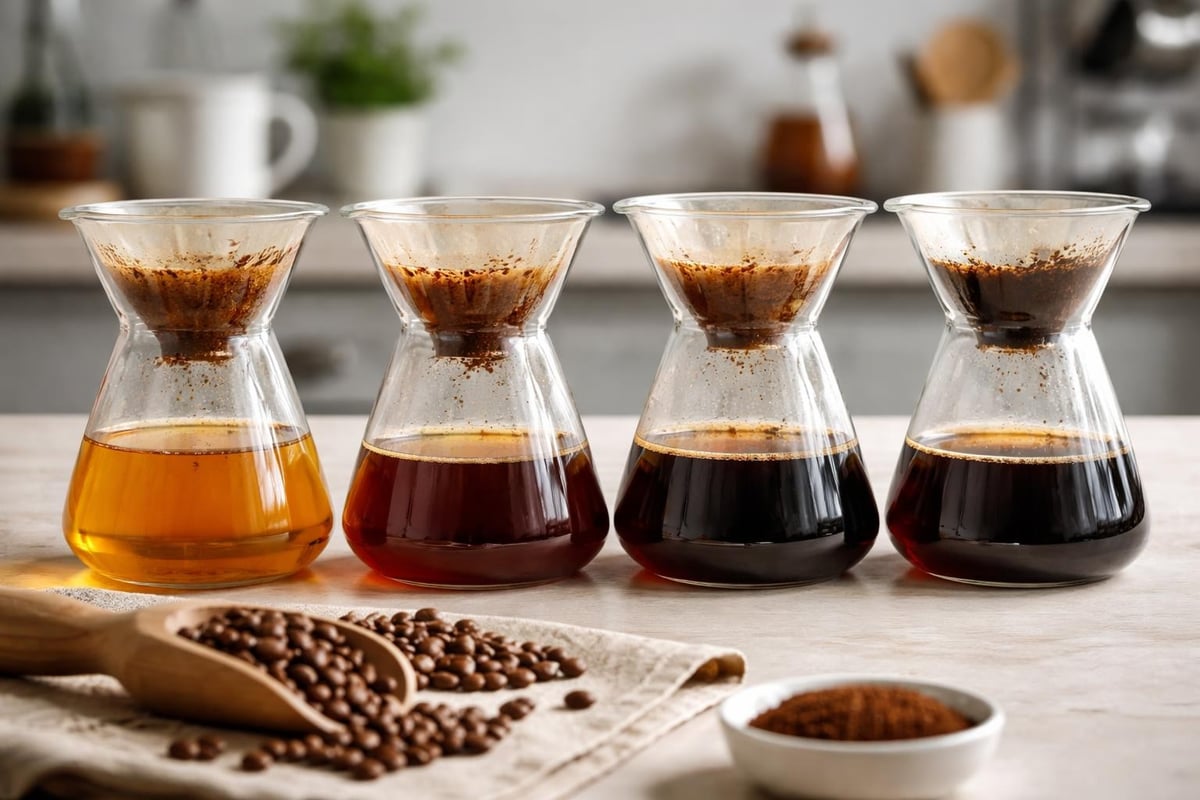
Pour-Over Methods and Balance Optimization
Pour-over brewing offers exceptional control over extraction variables, making it ideal for showcasing balanced coffee. The technique allows you to manipulate water flow, temperature, and agitation to emphasize specific characteristics while maintaining overall harmony.
Achieving clarity and balance in pour-over brewing requires attention to multiple factors. Water temperature between 195°F and 205°F typically produces balanced results, though specific coffees may perform better at the higher or lower end of this range.
The pouring technique significantly impacts extraction uniformity. Circular pours starting from the center and spiraling outward ensure even saturation. Pulse pouring, where you add water in intervals rather than continuously, can enhance clarity and prevent over-extraction. Total brew time for most pour-over methods should fall between three and four minutes.
Equipment Considerations for Balance
Different brewing devices emphasize various aspects of coffee. V60 drippers produce clean, bright cups that highlight acidity and complexity. Chemex brewers create exceptionally clean coffee with pronounced clarity due to their thick filters. Kalita Wave drippers feature flat beds that promote even extraction and balanced results. Clever drippers combine immersion and percolation brewing, offering control over extraction time and intensity.
Choosing equipment that complements your coffee's inherent characteristics helps maintain balance. A naturally bright African coffee might benefit from a Chemex, while a fuller-bodied Latin American blend could shine in a Kalita Wave.
Blending Philosophy for Balance
Creating balanced coffee through blending requires both art and science. Roasters combine beans from different origins, each contributing specific attributes to the final profile. A well-designed blend achieves complexity that no single origin could provide alone.
Blending strategies typically fall into three categories. Foundational blends use a base coffee (often Brazilian or Colombian) for body and sweetness, then add smaller percentages of other origins for complexity. Contrast blends combine coffees with opposite characteristics, such as bright African beans with earthy Indonesian coffees, to create dynamic balance. Seasonal blends rotate components based on harvest cycles, maintaining consistent flavor profiles while adapting to available coffees.
When exploring specialty coffee options, understanding how roasters approach blending helps you select coffees that match your preference for balance. Some blends prioritize consistency and approachability, while others emphasize complexity and seasonal variation.
Velours de Paris Coffee offers introductory options perfect for exploring different balance profiles in premium small-batch roasted coffees. Save 10% use code: WELCOME10 on your first order to discover how expertly sourced and roasted beans deliver exceptional balance.
Common Balance Challenges and Solutions
Achieving balanced coffee presents several common obstacles. Sourness often results from under-extraction caused by water that's too cool, grind that's too coarse, or insufficient brew time. Increase water temperature by five degrees, fine your grind slightly, or extend contact time to correct this issue.
Bitterness typically indicates over-extraction from water that's too hot, grind that's too fine, or excessive brew time. Lower water temperature, coarsen your grind, or reduce brew time to address harsh, astringent flavors.
Flatness suggests poor coffee quality, stale beans, or water chemistry issues. Fresh coffee makes an enormous difference. Beans lose their vibrancy within weeks of roasting, so purchase from roasters who provide roast dates and consume coffee within thirty days of roasting for optimal balance.
| Problem | Likely Cause | Solution |
|---|---|---|
| Sour, tart finish | Under-extraction | Increase temperature, finer grind, longer time |
| Bitter, harsh taste | Over-extraction | Decrease temperature, coarser grind, shorter time |
| Weak, watery body | Insufficient coffee or coarse grind | Increase dose or fine grind |
| Muddy, unclear flavors | Over-agitation or fine grind | Gentle pouring or coarser grind |
The Role of Freshness in Maintaining Balance
Coffee degrades rapidly after roasting due to oxidation, moisture loss, and CO2 off-gassing. These chemical changes disrupt the delicate balance between flavor compounds, causing once-balanced coffee to taste flat, stale, or cardboard-like.
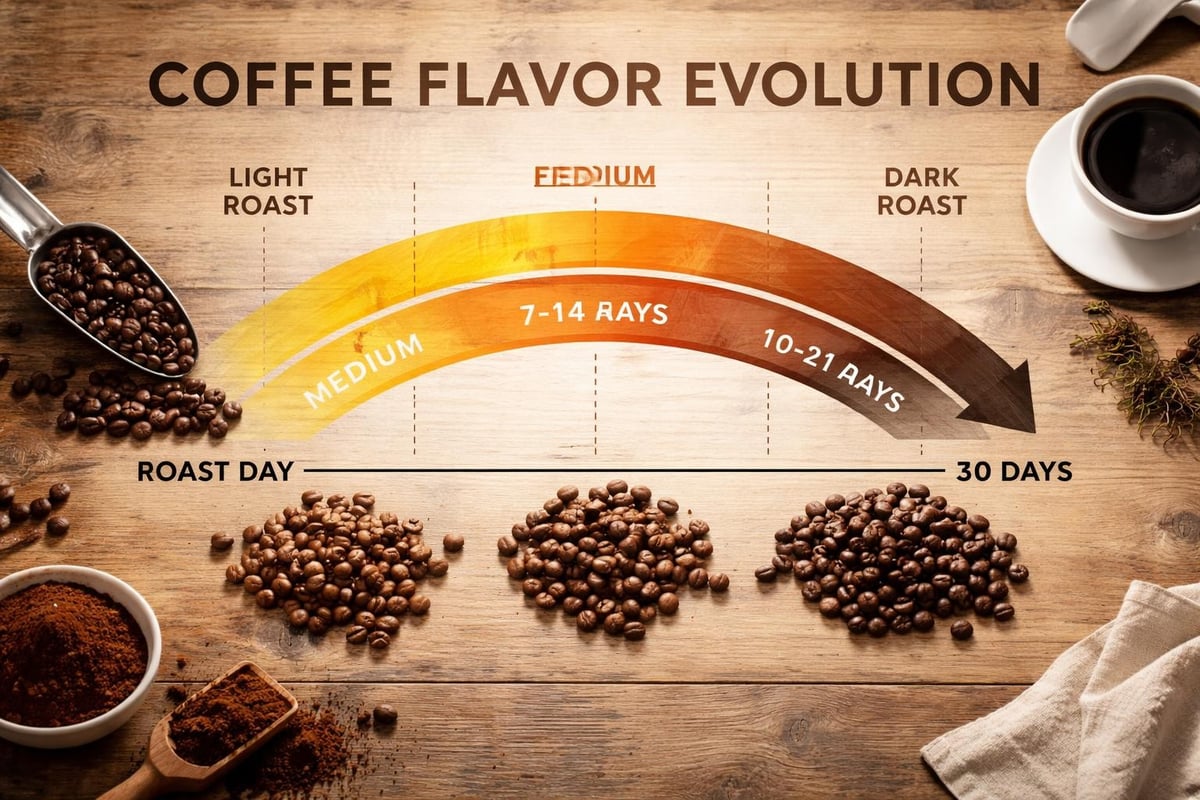
Optimal freshness windows vary by roast level and brewing method. Light roasts often peak seven to fourteen days post-roast, allowing CO2 to degas while volatile aromatics remain vibrant. Medium roasts typically shine five to twelve days after roasting. Dark roasts can perform well three to ten days post-roast but decline more rapidly due to increased surface oils.
Storage significantly impacts how long coffee maintains balance. Keep whole beans in an airtight container at room temperature, away from light, heat, and moisture. Avoid refrigeration, which introduces moisture and odor contamination. Freezing can extend shelf life for long-term storage, but requires proper airtight packaging and complete thawing before grinding.
Advanced Balance Concepts
Professional coffee tasters recognize that coffee qualities work together harmoniously at multiple levels. Primary balance refers to the basic interplay of acidity, sweetness, body, and bitterness. Secondary balance involves how specific flavor notes complement each other, such as chocolate pairing with hazelnut or berry notes enhancing citrus brightness.
Temporal balance describes how coffee evolves from the first sip through the finish and aftertaste. Exceptional balanced coffee reveals different characteristics at different temperatures, offering complexity without losing coherence. Hot coffee might emphasize bright acidity, while cooled coffee could highlight sweetness and body.
Structural balance considers how coffee feels in your mouth, not just how it tastes. The relationship between astringency, smoothness, and viscosity contributes to overall drinking pleasure. A coffee might have perfect flavor balance but feel unpleasant if structural elements clash.
Professional Terminology and Descriptors
Understanding the correct proportions of various coffee attributes helps communicate preferences to roasters and baristas. Terms like "clean," "complex," "structured," and "rounded" all relate to different aspects of balance.
Clean indicates freedom from defects and clarity of flavors. Complex suggests multiple distinct flavors working together. Structured describes well-defined acidity and body. Rounded implies smooth integration of all elements without sharp edges.
When exploring coffee collections, these descriptors help you identify profiles that match your preferences. A "clean and bright" coffee offers different balance characteristics than a "rounded and chocolatey" option.
Espresso and Balance Considerations
Espresso concentrates coffee's characteristics, making balance even more critical. The pressurized extraction amplifies both positive attributes and flaws, creating an intense experience where imbalance becomes immediately apparent.
Achieving balanced espresso requires precise control over multiple variables. Dose, yield, and time form the fundamental ratio. A typical starting point uses eighteen grams of coffee to produce thirty-six grams of liquid espresso in twenty-five to thirty seconds. This 1:2 ratio emphasizes balance, though some coffees perform better at 1:1.5 (ristretto) or 1:3 (lungo) ratios.
Temperature profiling allows advanced espresso machines to adjust water temperature during extraction. Lower initial temperatures can reduce acidity, while higher temperatures near the end increase body and sweetness. These techniques help roasters and baristas optimize balance for specific coffees.
Developing Your Palate for Balance
Training yourself to recognize balanced coffee involves deliberate, focused tasting. Start by comparing coffees with obvious differences, such as a light Ethiopian coffee versus a dark French roast. Note how acidity, sweetness, body, and bitterness present differently.
Progress to more subtle comparisons using the same coffee brewed with different parameters. Brew one cup with a 1:15 ratio and another at 1:17, tasting them side-by-side to understand how extraction affects balance. This comparative approach develops the discrimination necessary to identify what makes coffee nuanced and harmonious.
Keep tasting notes documenting what you taste and which parameters you used. Over time, patterns emerge that reveal your preferences and help you dial in balanced coffee consistently. Note the coffees you enjoyed most from Velours de Paris Coffee's selections, identifying common characteristics that define your ideal balance.
Regular cupping sessions with multiple coffees accelerate palate development. Set up three to five different coffees, brew them identically, and taste them systematically. This practice highlights how different beans achieve balance through different pathways.
Regional Preferences and Balance Interpretations
Coffee cultures worldwide interpret balance differently based on local traditions and preferences. Italian espresso culture emphasizes body and sweetness with lower acidity, creating robust, chocolatey profiles. Scandinavian coffee culture favors bright acidity and clarity, highlighting origin characteristics and fruit notes. American specialty coffee tends toward moderate acidity with pronounced sweetness, seeking versatile profiles that appeal broadly.
These regional interpretations demonstrate that balanced coffee isn't a single fixed target but rather a spectrum of possibilities. What feels perfectly balanced in Rome might taste under-roasted in Oslo or overly simple in Portland. Understanding these perspectives helps you articulate your preferences and explore coffees roasted with different balance philosophies.
Asian coffee markets increasingly appreciate balanced profiles that combine traditional full-bodied characteristics with modern clarity and complexity. This evolution reflects specialty coffee's global expansion and the cross-pollination of tasting preferences.
The Future of Balanced Coffee
Innovation in coffee processing, roasting technology, and brewing equipment continues expanding what balanced coffee can achieve. Experimental processing methods like anaerobic fermentation, carbonic maceration, and extended drying create new flavor possibilities that challenge traditional balance concepts.
Climate change pressures coffee-growing regions to adapt, potentially shifting the flavor profiles of familiar origins. Roasters and farmers collaborate on varieties and processing techniques that maintain balance despite changing conditions. These adaptations ensure that exceptional balanced coffee remains accessible to future generations.
Consumer education drives increasing demand for nuanced, well-balanced coffee rather than simply "strong" or "mild" options. This sophistication encourages roasters to invest in quality sourcing and precise roasting, raising standards across the specialty coffee industry.
Mastering balanced coffee enhances every cup you brew, transforming your daily ritual into an exploration of flavor harmony and complexity. Whether you prefer bright and fruity profiles or rich and chocolatey characteristics, understanding how acidity, sweetness, body, and bitterness interact empowers you to make informed choices and brew exceptional coffee consistently. Velours de Paris Coffee sources premium beans from the world's finest regions and roasts them in small batches specifically to achieve the exceptional balance that makes each cup memorable. Explore their carefully curated selections to discover perfectly balanced coffees that match your taste preferences and brewing style.